EV Powertrain repair

EV thermal management repair cost

Use the parts prices, labor hours and local totals to plan for this repair. Confidence C applies to a broad repair category; this is not a shop quote for your specific vehicle.

$500-$4,000parts range
3-12labor hours
1diagnostic hours modeled
major component jobprice basis
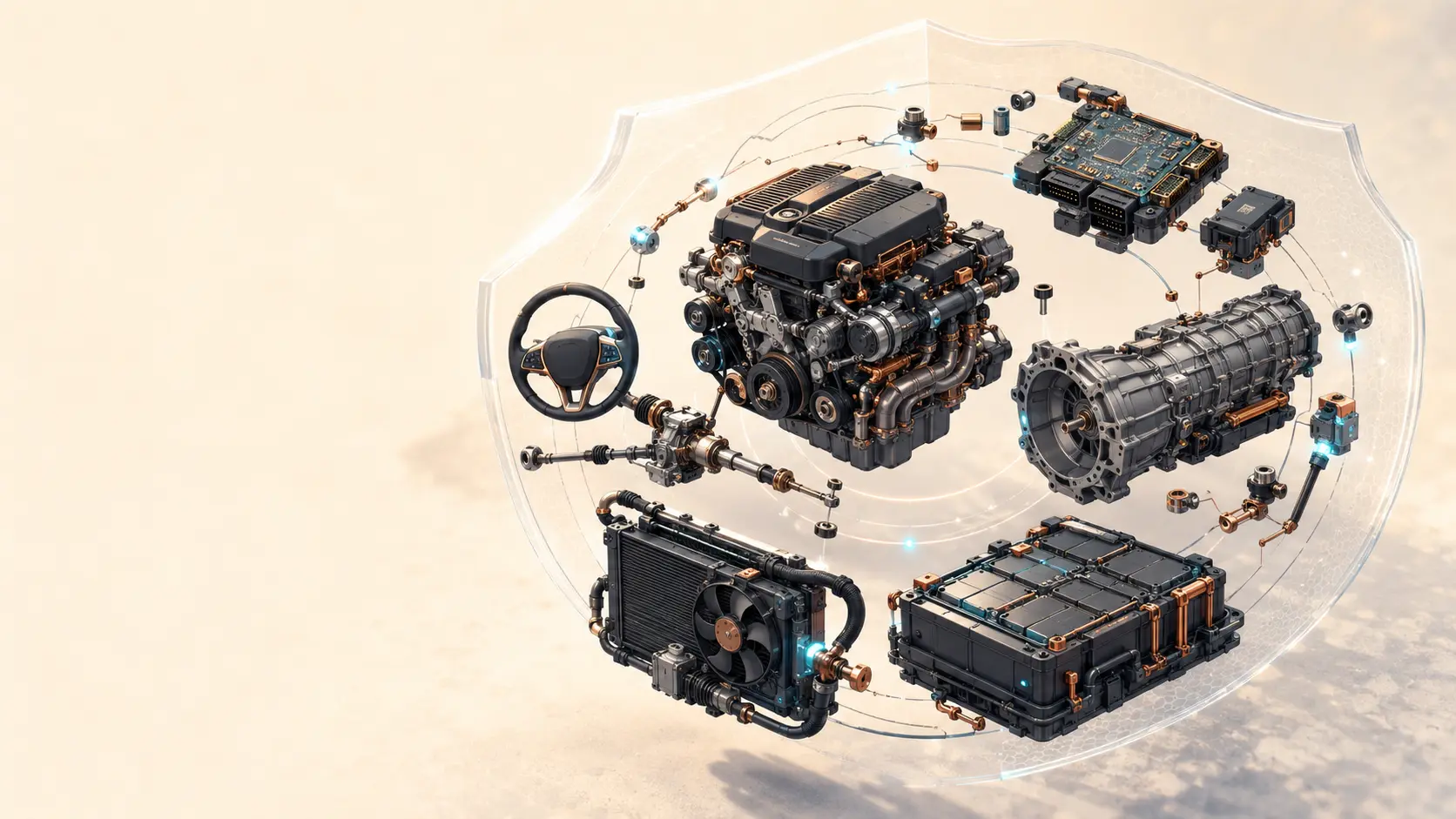
Animated automotive components representing ev thermal management repair

Cost and coverage

How this repair affects warranty value

The parts estimates for ev thermal management repair sit $3,500 apart. Using the $148 median labor rate adds roughly $1,033 at the midpoint, before the shop includes tax or supplies.

Our general coverage guide marks this repair as often covered by exclusionary plans, subject to the cause of failure and contract exclusions. The repair shop needs approval, while the diagnosis must fit the contract's covered causes.

See all ev powertrain repairs

Local estimates

Estimated total repair bills by city

These examples combine the same parts benchmark with modeled independent-shop labor rates in four metros.

MetroLabor midpointTotal estimate
Dallas, TX$144/hr$872-$6,136
New York, NY$160/hr$912-$6,368
Los Angeles, CA$165/hr$925-$6,439
Miami, FL$144/hr$873-$6,139

Estimate notes

May involve pumps, valves, compressor or integrated modules.

Before authorizing a repair

What to check before paying for ev thermal management repair

Check what the repair price includes

The benchmark price is for major component job. Parts run from $500 to $4,000; the modeled repair takes 3 to 12 labor hours, with 1 diagnostic hours in the midpoint calculation.

May involve pumps, valves, compressor or integrated modules. Ask the shop to identify which of those items are included before comparing two totals.

Compare the estimate with a shop quote

This repair totals about $2,634 using a $148 hourly rate from the middle metro in our labor model. We calculate that amount from our assumptions; it is not an observed average bill for your exact car.

This category has no published national benchmark attached to the current record. Treat its parts and labor figures as broad planning assumptions until a shop prices the exact vehicle.

Check the cause as well as the component

A contract can list ev powertrain coverage and still exclude the cause of this failure. Ask the administrator about diagnosis, labor-rate limits, connected damage and preauthorization before the shop starts work.

Factory coverage and an open safety recall are separate checks. Use NHTSA's VIN recall lookup to check the individual vehicle; a model-level recall count cannot tell you whether your car is affected.

Ask for these details in writing

  • The diagnosed condition, the part number and the number of assemblies being replaced.
  • Parts type, labor hours or flat-rate charge, diagnosis, fluids, calibration and taxes as separate lines where applicable.
  • What you owe if the repair is declined or a contract claim is denied.
  • The repair warranty and the amount that requires your approval before extra work begins.

The FTC's repair guide recommends a written estimate identifying the condition, parts and labor. Its service-contract guidance explains why authorization, exclusions and reimbursement limits matter.

Need to describe a symptom before a diagnosis? Choose the exact vehicle in FixCatalogue and open the underlying source. A symptom match alone does not justify replacing this part.